
How best to integrate Drug and Alcohol requirements into an induction program

Employers face an ongoing challenge to demonstrate that they have effectively communicated the requirements of their drug and alcohol policy to their workforce.
This article aims to outline how best to integrate this information into an induction and training program.
Consumption of drugs and alcohol is an ongoing issue within Australian society that has potential impacts on health and safety in the work environment. As a person conducting a business or undertaking (PCBU), employers have a legal obligation to provide a safe working environment, including managing the risk of workers being impaired by drugs and alcohol. This is even more critical in high-risk industries, such as construction, mining and transport.
Important: Workers have clear legal obligations to not place themselves or other workers at risk – including being fit for work and not impaired by drugs and alcohol.
An effective drug and alcohol management program must ensure this risk is identified, assessed and controlled as far as ‘reasonably practicable’. Over the past decade, workplace drug and alcohol programs have developed a great deal, due to factors such as advances in technology and testing procedures. These advances have meant that more controls are considered reasonably practicable to use in the workplace to manage the risk.
How to ensure your induction program is reasonably practicable
Whatever policies you have in place, in order to satisfy the ‘reasonably practicable’ test, each employer has a legal obligation to ensure their workers and management understand the policies, and are deemed competent.
An employers induction and training program can be a practical way to effectively communicate:
The requirements of the drug and alcohol policy.
The roles and responsibilities of stakeholders, including managers, workers and unions.
Outcomes of adverse findings from the policy and any testing performed.
The program needs to clearly demonstrate that all parties understand the information provided, are clear on their role and are deemed competent.
Developing an effective drug and alcohol induction program involves challenges in regard to:
How much information needs to be provided.
What the most effective training format is to maximise efficiency and meet the business’s needs, e.g. online or face-to-face training.
How best to demonstrate workers’ understanding and competency.
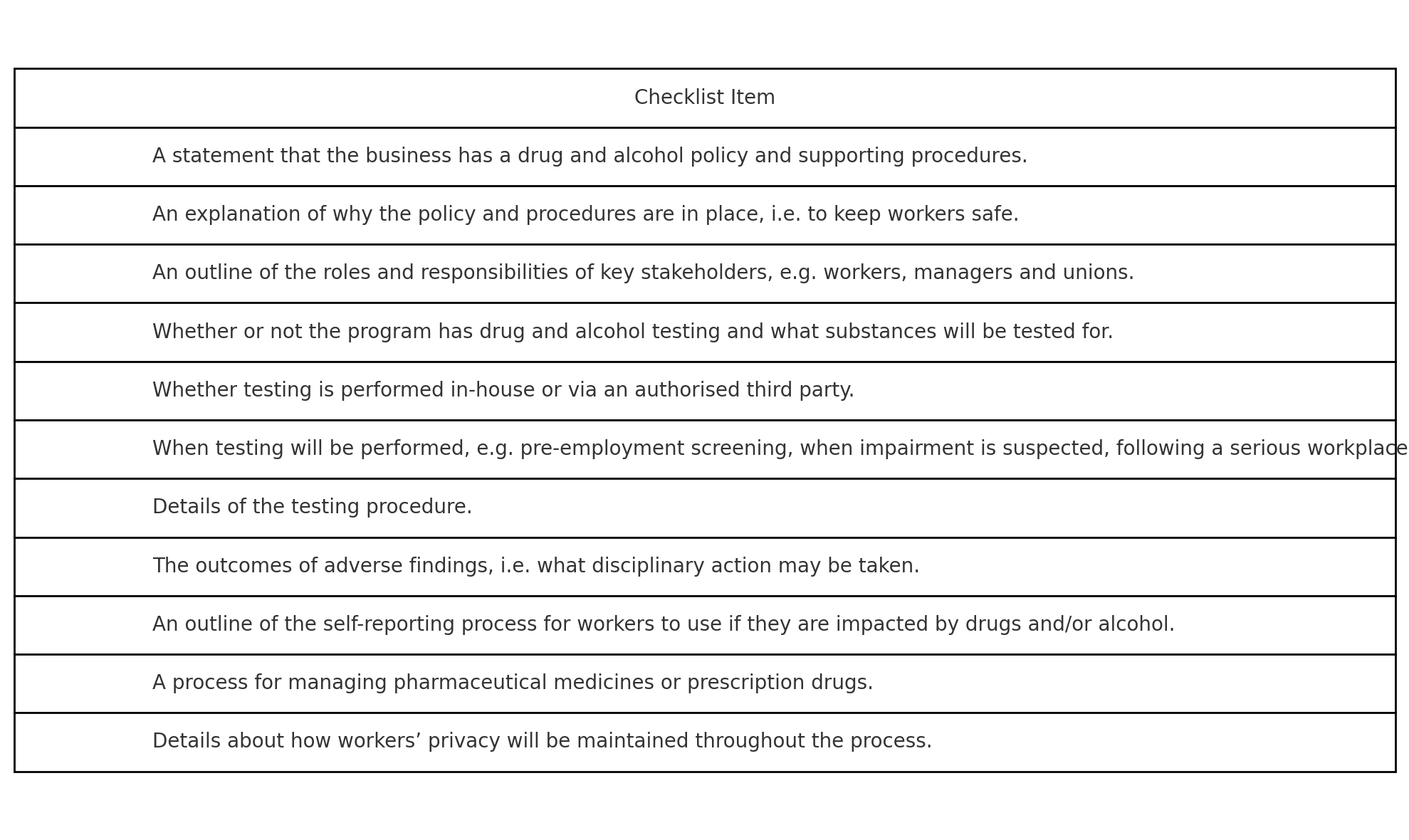
The following checklist aims to address some of these challenges for drug and alcohol induction. Note this assumes the employer has a drug and alcohol policy and supporting procedures in place. However, some of the information can also be used to cross-check.
How best to demonstrate worker understanding and competency
The fact that a worker has completed a drug and alcohol induction program does not automatically demonstrate that they understood the information provided and could be deemed competent. There are a number of ways to demonstrate competency – the method will be influenced by how you deliver the induction program.
It should be clearly stated that if the worker has any questions or concerns regarding the information, they must raise them immediately with management so that these can be addressed, with confidentiality maintained. There should also be provisions for workers with language or literacy limitations that may impact on their ability to understand the information.
Two other elements that need to be included to demonstrate competence and understanding are:
Testing workers’ knowledge of key components of the program, e.g. using multiple-choice questions.
Having the worker declare that they understand the policy and agree to abide by it as a condition of employment.
Tip: File the completed induction information securely and electronically so that it can be accessed at any time.
Refresher training at defined periods will further strengthen your program, as well as allowing you to provide updates when policies and procedures are amended. Conduct regular reviews of your program’s effectiveness in order to manage this dynamic and ever-changing risk to the health and safety of your business.